A short history of Seattle’s Central District, and where to see it today
From William Grose’s land on East Madison to Jackson Street jazz, the Panthers, Liberty Bank and Africatown: how the CD became the heart of Black Seattle.
- Grose buys land
- 1882
- Black in 1970
- 73%
- Black in 2018
- 16%
The short answer
The Central District became the centre of Black Seattle after William Grose bought land on East Madison in 1882, and redlining and restrictive covenants then kept Black families there for decades. It was about 73% Black in 1970 and about 16% by 2018, but many of its institutions are still there to visit.
What changed
- Nov 10, 2026First published
Ask anyone who grew up in Black Seattle where home was, and most will say the CD. The Central District sits between downtown and Lake Washington, which is where its name comes from, and it is the city’s oldest surviving residential area. This is a short history built from HistoryLink, BlackPast, the University of Washington and local reporting, with the places you can still visit at the end.
How it started
William Grose arrived in Seattle around 1860 and ran a hotel and restaurant on Yesler Way. In 1882 he bought a 12-acre tract from Henry Yesler for $1,000 in gold, becoming the first Black person to own property in what was then East Madison. His house still stands at 1733 24th Avenue. Grose sold lots to Black newcomers, and the neighbourhood began to take shape around them (HistoryLink).
Why Black families stayed
For most of the 20th century, Black Seattleites had little choice about where to live. Racial restrictive covenants written into property deeds barred Black buyers from much of the city, and in 1936 the federal Home Owners’ Loan Corporation graded the Central District “hazardous”, so banks would not lend there (UW Civil Rights and Labor History Project). The CD became, by default, Black Seattle.
War work and Jackson Street jazz
The Second World War brought shipyard and Boeing jobs, and Seattle’s Black population grew from 3,789 in 1940 to 15,666 in 1950. On Jackson Street, as many as 34 clubs ran between 1st and 14th Avenues. Ray Charles arrived in 1948 at 17 and met a teenage trumpeter from Garfield High named Quincy Jones (HistoryLink).
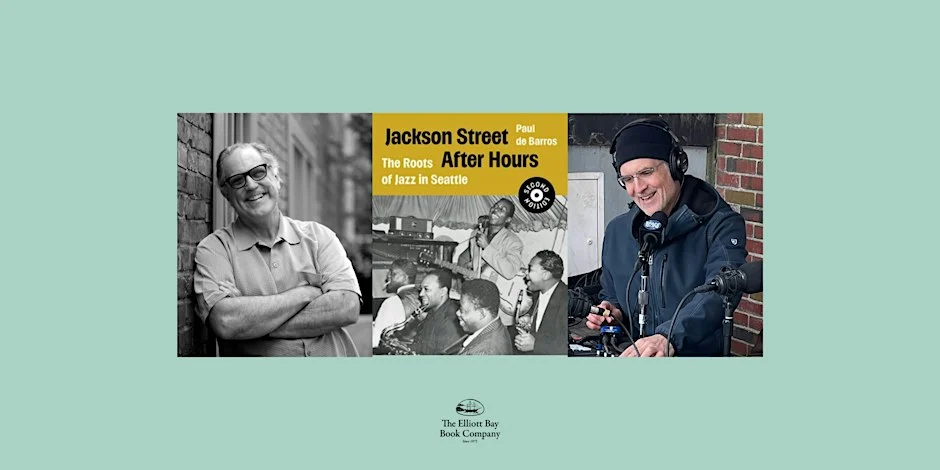
Nov16Mon
Jackson Street After Hours: Paul de Barros with Feliks Banel
Took place, Elliott Bay Book Company, Seattle. Free · registration optional
The jazz historian Paul de Barros presents the new edition of his book on this era.
Civil rights
- 1964: Seattle voters reject an open housing ordinance, which would have banned racial discrimination in home sales, by nearly two to one (HistoryLink).
- 1967: Stokely Carmichael speaks at Garfield High School.
- April 1968: 19-year-old Aaron Dixon leads the founding of the Seattle chapter of the Black Panther Party, the first outside California (HistoryLink).
- April 1968: the City Council passes an open housing ordinance unanimously.
- May 1968: Liberty Bank opens at 24th and East Union, founded in answer to redlining (BlackPast).
New neighbours from East Africa
From 1980 the federal government began resettling Ethiopian refugees in Seattle, many first in the Central District and Yesler Terrace, and Eritreans followed through the decade (Cascade PBS). Their restaurants still line East Cherry Street; see our street-by-street guide.
Change, and building back
The neighbourhood was about 73% Black in 1970. By 2018 the estimate was about 16%, as rising prices pushed families south and out of the city (UW). But the institutions fought to stay:
- 1985: activists occupy the closed Colman School. The campaign becomes the Northwest African American Museum, which opens there in 2008.
- 2019: the Liberty Bank Building opens on the old bank’s site with 115 affordable homes and space for Black-owned businesses, and Wa Na Wari opens as a Black arts space in a fifth-generation Black-owned home.
- 2022: Africatown opens the William Grose Center for Cultural Innovation in a former fire station.
- 2024: Africatown Plaza opens 126 affordable homes at 23rd and Union (Capitol Hill Seattle).
Places to visit
- Northwest African American Museum, 2300 S Massachusetts St, in the 1909 Colman School.
- Jimi Hendrix Park, next door at 2400 S Massachusetts St.
- Garfield High School, 400 23rd Ave, where Quincy Jones graduated in 1950.
- Ezell’s Famous Chicken, the original at 501 23rd Ave, across from Garfield since 1984.
- Douglass-Truth Library, 2300 E Yesler Way, whose African American Collection began in 1965.
- Liberty Bank Building, at 24th and East Union.
- Wa Na Wari, 911 24th Ave. Hours vary, so check before you go.
- Langston Hughes Performing Arts Institute, 104 17th Ave S, in a 1915 former synagogue.
- Washington Hall, 153 14th Ave, where Billie Holiday, Duke Ellington and a young Jimi Hendrix played.
Still here: the institutions on Ujima
- 01
Northwest African American Museum
Museum · Seattle
Museum with exhibits and programs featuring the visual arts, music, crafts, literature and history of African American in the PNW.
2300 S. Massachusetts St, Seattle
Hours, map and events - 02
Langston Seattle
Black Arts & Culture · Seattle
Leads innovative programs and fosters communities that center Black artists and audiences while honoring the enduring legacy of Seattle's Black Central Area.
104 17th Ave. S, Seattle
Hours, map and events - 03
Central District Forum
Arts & Entertainment · Seattle
Nonprofit organization solely dedicated to presenting emerging Black arts, artists, and ideas in the Seattle area.
104 17th Ave. S, Seattle
Hours, map and events - 04
Arte Noir
Black Art/ Events/ Culture · Seattle
At Midtown Square, on the Africatown Plaza block.
2301 E. Union St. Suite H, Seattle
Hours, map and events - 05
Urban League of Metropolitan Seattle
Economic Empowerment · Seattle
Our five areas of focus are advocacy and civic engagement, education, housing, public health and workforce development.
105 14th Ave, Suite 200, Seattle
Hours, map and events - 06
Byrd Barr Place
Human Services · Seattle
Programs that help with basic human services; a warm home, food on the table, and immediate financial relief. Own or run Byrd Barr Place? Claim this page for free to add your photos, hours, story and events, and reach more of the community.
722 18th Ave, Seattle
Hours, map and events - 07
Estelita's Library
Social Justice Bookstore · Seattle
A place where people of all ages and backgrounds gather to talk, play, host community book talks, classes, meetings, history lessons & much more.
241 MLK Jr. Way S, Seattle
Hours, map and events - 08
Ezell's Famous Chicken
Fried Chicken · Seattle
Seattle’s most famous chicken shack since 1984! Serving original, spicy, and half-and-half combos. Own or run Ezell's Famous Chicken? Claim this page for free to add your photos, hours, story and events, and reach more of the community.
501 23rd Ave, Seattle
Hours, map and events
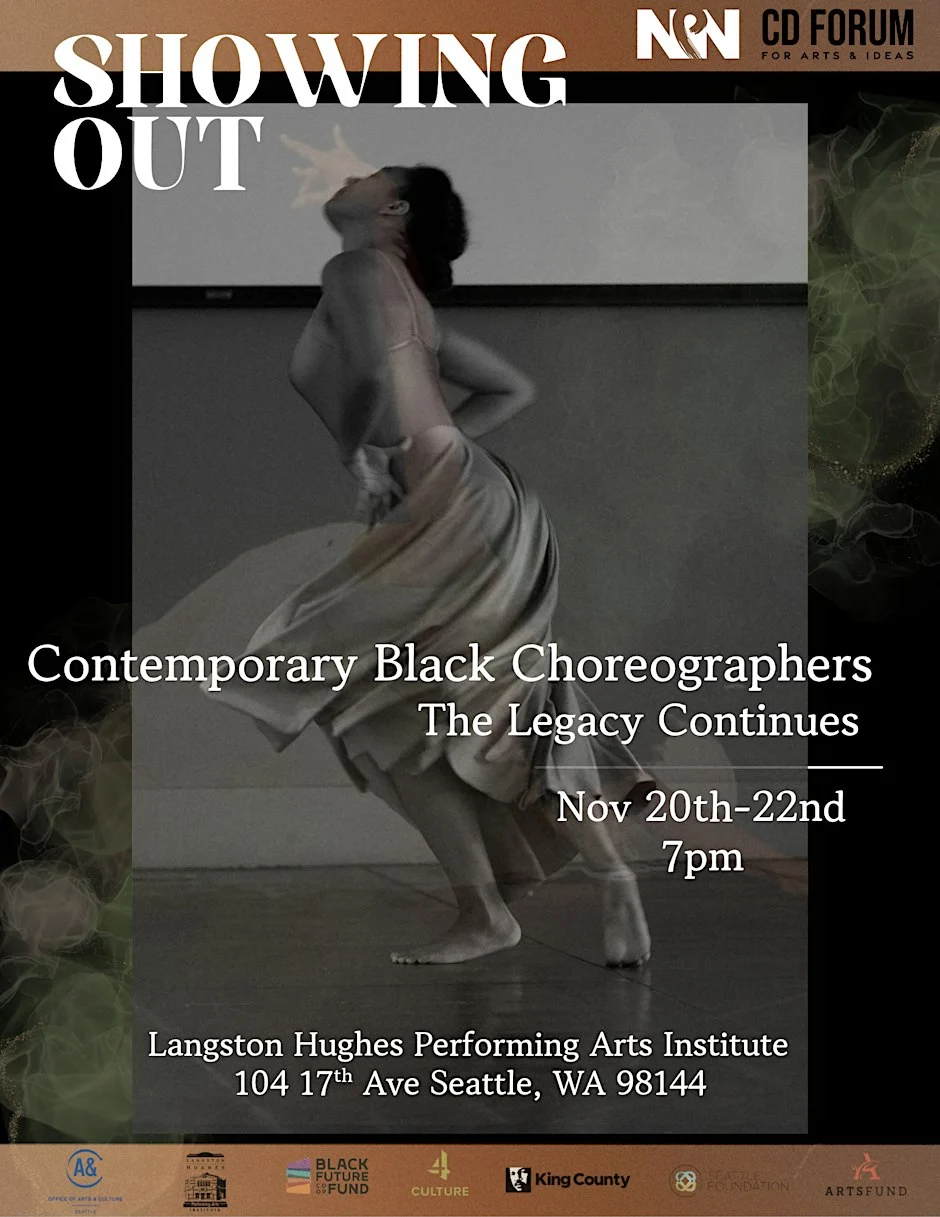
Nov20Fri
Showing Out: Contemporary Black Choreographers
Took place, Langston Hughes Performing Arts Institute, Seattle. Free to register · donations welcome
New work by Black choreographers at Langston, a CD tradition.
Sources
HistoryLink: Central Area, HistoryLink: William Grose, BlackPast, UW Seattle Civil Rights and Labor History Project, Seattle Municipal Archives: open housing, South Seattle Emerald. Black Past, the online encyclopedia of African American history, is itself a Seattle organisation.
Questions people ask
- Why is it called the Central District?
- Because it lies midway between downtown Seattle and Lake Washington. It is the city’s oldest surviving residential area, and many residents simply call it the CD.
- Is the Central District still a Black neighbourhood?
- Culturally, yes: its museums, churches, arts spaces and businesses still centre Black life. By population it is no longer majority Black, falling from about 73% in 1970 to about 16% in 2018.
- What is Africatown?
- The Africatown Community Land Trust builds Black-led housing and cultural space in the Central District, including the William Grose Center and Africatown Plaza, and partnered on the Liberty Bank Building.
- Who was William Grose?
- One of Seattle’s earliest and wealthiest Black settlers. His 1882 land purchase on East Madison seeded the Central District’s Black community.
#central district seattle#black history seattle#africatown#seattle history
Know a business we should feature?
Tell us who, and why. Pitch a story or nominate a business.
Keep reading

Heritage
The Black miners of Roslyn: how a coal strike brought hundreds of Black families to the Cascades
In 1888 a railway company brought Black miners to Roslyn to break a strike. By 1900 they were a fifth of the town. Their story, and what to see there today.
Ujima Network team, November 13, 2026. 5 min read
Heritage
The Seattle Black Panther Party: a short history, and the places that still carry it
Seattle had the first Black Panther chapter outside California. Its free clinic is still open on Yesler Way, and its memorial mural became a city landmark in 2026.
Ujima Network team, November 13, 2026. 5 min read

Heritage
Buffalo Soldiers at Fort Lawton: the regiment that was a third of Black Seattle, and what remains
In 1909, 900 Black soldiers arrived at Fort Lawton in what is now Discovery Park. Their band barracks still stands, and a Tacoma museum hopes to move in.
Ujima Network team, November 13, 2026. 4 min read
The Village