The citizenship fee waiver and reduced fee: who qualifies, and free help applying in Seattle
The naturalisation fee stops many green card holders from applying. USCIS can waive it or cut it in half, and Seattle’s New Citizen Program will help with the forms for free.
- Reduced fee
- $380
- New Citizen Program partners
- 10
The short answer
USCIS can waive the N-400 fee if you receive a means-tested benefit, your household income is at or below 150% of the Federal Poverty Guidelines, or you face financial hardship: file Form I-912. Income under 400% qualifies for a $380 reduced fee. Both mean filing on paper. Seattle’s New Citizen Program helps for free.
What changed
- Nov 13, 2026First published
Many permanent residents who could become citizens put it off because of the fee. They often do not know that US Citizenship and Immigration Services (USCIS) can waive the fee altogether, or halve it, depending on household income. This guide explains both options as USCIS describes them, and where to get free help in Seattle and King County. Fees and rules were checked on USCIS pages on 13 November 2026; they change, so check again before you file. This guide is general information, not legal advice. For advice on your own case, start with our list of free immigration legal help in Seattle.
What the application costs in November 2026
The USCIS fee schedule (Form G-1055, edition 10/26/26) lists Form N-400, Application for Naturalization, at $760 filed on paper or $710 filed online. The reduced fee is $380. With an approved fee waiver you pay nothing (USCIS fee schedule).
The full fee waiver: three ways to qualify
You ask for a waiver on Form I-912, Request for Fee Waiver, sent together with the N-400. USCIS says you can request one if you show any one of these (USCIS, page reviewed 14 October 2026):
- A means-tested benefit. You, your spouse, your child, or your parent if you are under 21 or disabled, currently receive a benefit that depends on income. USCIS’s examples are Medicaid, the Children’s Health Insurance Program, SNAP (food stamps), TANF and SSI.
- Low income. Your household income is at or below 150% of the Federal Poverty Guidelines when you file.
- Financial hardship. You are going through extreme financial hardship that stops you paying the fee, such as large medical bills.
The proof matters as much as the reason. For a benefit, USCIS wants a letter, notice or other official document that shows the name of the person receiving it, the agency, the type of benefit, and that it is current. For hardship, it wants a detailed description of your finances and evidence such as bank statements, pay stubs, rent agreements, utility bills and medical bills. If your family is on Apple Health or Basic Food, ask your helper whether your approval letter will serve as proof.
The reduced fee: for incomes above the waiver line
If your household income is above 150% and under 400% of the Federal Poverty Guidelines, you can ask for the reduced fee of $380. (USCIS words the upper limit two ways: its reduced-fee page says “less than 400%”, its fee schedule says “not more than 400 percent”.) There is no separate form: you answer “Yes” in Part 10 of the N-400, complete that part, and attach documents that show your household income. USCIS says that if your income is at or below 150%, you should ask for the full waiver instead (USCIS, USCIS N-400 page).
The poverty guidelines change every year and depend on household size, so look up the current table linked from the USCIS pages, or ask one of the organisations below to do the sum with you.
Three rules that catch people out
- Paper only. USCIS says you cannot file the N-400 online if you are asking for a fee waiver or a reduced fee. You must post a paper form (USCIS).
- Send it together. The I-912 goes in the same envelope as the application. USCIS says not to send it on its own (USCIS).
- Translate everything. Any document in another language needs a full English translation.
The I-912 can also be used with some other forms, including the I-90 to renew a green card and some work permit applications. It cannot be used for DACA, and USCIS says it cannot waive the newer fees set by Congress in 2025 under H.R. 1 (USCIS, page reviewed 5 June 2026). See our guides to renewing a green card and work permits.
Free help in Seattle and King County
The City of Seattle’s New Citizen Program pays ten community organisations to help low-income immigrants and refugees apply for citizenship. The help is free and includes preparing and filing the N-400, a fee waiver or reduced fee request if you qualify, disability waivers, practice interviews, classes or tutoring, and full legal representation with a case manager. The city estimates the programme saved community members $1.8 million in legal and application fees in 2024 (Seattle OIRA). Partners include:
- Neighborhood House, (206) 734-0366: Amharic, Arabic, Somali, Tigrinya, Russian, Ukrainian, Vietnamese, Spanish and Burmese.
- Refugee Women’s Alliance, (206) 721-0243: Arabic, Dari, Farsi, Pashto, Somali, Russian, Ukrainian, Vietnamese and more.
- Catholic Immigration Legal Services, (206) 406-1218: Somali, French, Spanish, Dari, Pashto, Russian, Tagalog and Japanese.
- Northwest Immigrant Rights Project, (206) 587-4009: Arabic and Spanish, other languages by phone interpreter.
- Asian Counseling and Referral Service, (206) 695-7578, and Literacy Source, (206) 502-2061.
The full list of ten, with class times, is on the city’s page. If you live outside King County, the city points to Washington New Americans, which runs free citizenship workshops around the state. For general questions call the Office of Immigrant and Refugee Affairs on (206) 727-8515.
Our guide to citizenship classes in Seattle covers preparing for the interview, and once you take the oath, registering to vote takes a few minutes. For other legal problems, not immigration ones, a free pop-up at Burien Library may help:
Dec29Tue
Legal Aid Pop-Up at Burien Library
3:00 PM, Burien Library, Burien. Free, walk-in
Free walk-in help with civil problems such as landlord-tenant issues, family law, estates and debt. It is not an immigration clinic.
Details and RSVP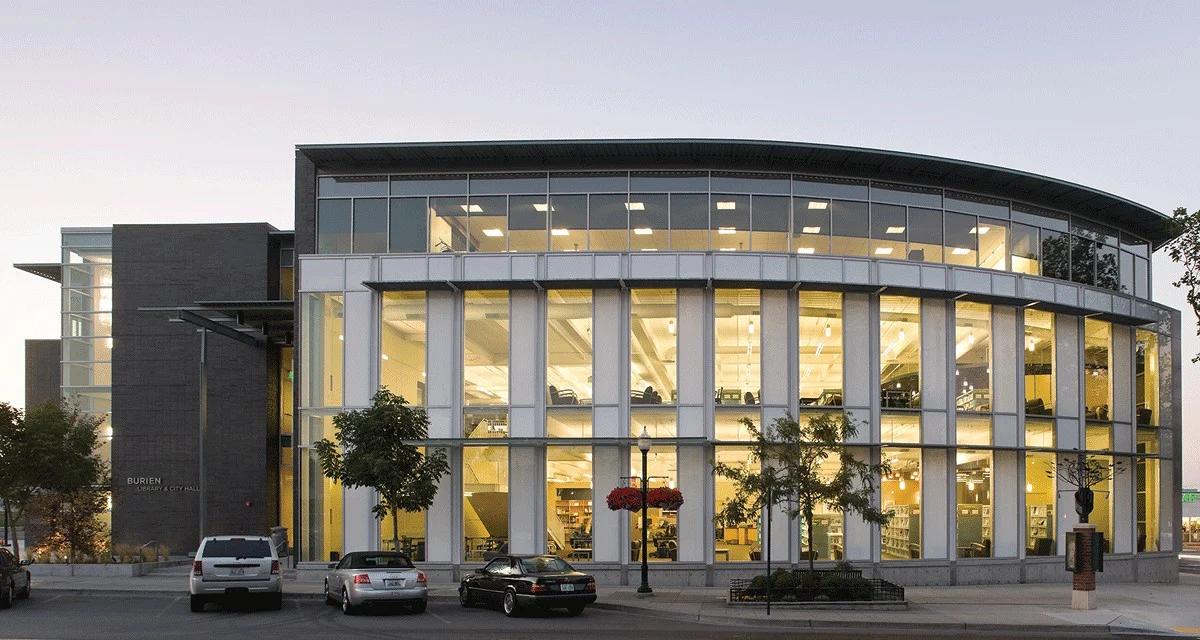
Sources
USCIS: Form I-912, Request for Fee Waiver, Additional information on filing a fee waiver, Additional information on filing a reduced fee request, Form N-400, Form G-1055 fee schedule (edition 10/26/26). Seattle OIRA: New Citizen Program. Checked 13 November 2026.
Questions people ask
- Who qualifies for a citizenship fee waiver?
- USCIS can waive the fee if you or a close family member receive a means-tested benefit such as Medicaid, SNAP, TANF or SSI, if your household income is at or below 150% of the Federal Poverty Guidelines, or if you are in extreme financial hardship.
- How much is the reduced fee for the N-400?
- The reduced fee is $380, against $760 on paper or $710 online, according to the USCIS fee schedule dated 26 October 2026. It is for households with income above 150% and under 400% of the Federal Poverty Guidelines.
- Can I apply for citizenship online with a fee waiver?
- No. USCIS says you cannot file Form N-400 online if you are requesting a fee waiver or a reduced fee. You must file on paper.
- Is there a separate form for the reduced fee?
- No. You request it in Part 10 of Form N-400 and attach proof of household income. The full waiver uses Form I-912.
- Where can I get free help with a citizenship application in Seattle?
- The City of Seattle’s New Citizen Program funds ten organisations, including Neighborhood House, ReWA, Catholic Immigration Legal Services and the Northwest Immigrant Rights Project. Call (206) 727-8515 to be pointed to one.
#citizenship fee waiver#form i-912#n-400 reduced fee#naturalization fee waiver seattle#new citizen program seattle#free citizenship help seattle
Know a business we should feature?
Tell us who, and why. Pitch a story or nominate a business.
Keep reading
Grants and money
Down payment assistance in Seattle and Washington: the programmes, the amounts and who each is for
From a 0% state loan to $150,000 through the Covenant programme and up to $76,000 inside Seattle: the down payment help on offer in 2026 and how to reach it.
Ujima Network team, November 13, 2026. 5 min read
Grants and money
Help paying heating and electric bills in Seattle and King County: LIHEAP, PSE HELP and City Light
Three agencies handle energy grants in King County, and which one you call depends on where you live. Here is who to ring, what each programme pays and the income limits.
Ujima Network team, November 13, 2026. 5 min read
Grants and money
Free transit for under-19s and $1 fares for seniors in King County: how to get the cards
Anyone 18 or younger rides buses, trains and ferries free across the region. Riders 65 and over, and people with disabilities, pay $1 with a free permit. Here is how to get each card.
Ujima Network team, November 13, 2026. 4 min read
The Village