How Seattle’s Ethiopian, Eritrean and Somali communities took root
Students in the 1960s, refugees in the 1980s and 1990s, and the families who sponsored the next ones: how East Africans built one of America’s largest communities here.
- East Africans (city estimate)
- 27,000
- Somali Community Services
- 1995
- Homes at Ethiopian Village
- 89
The short answer
The first East Africans in Seattle were mostly students in the 1960s and 1970s. War and famine then brought refugees, who sponsored family in turn. The City of Seattle uses an estimate of 27,000 East Africans in Seattle and King County, which ranks in the top three US counties for people born in Ethiopia.
What changed
- Nov 11, 2026First published
If you have lived in South Seattle, you have heard Amharic, Tigrinya, Oromo and Somali at the bus stop and smelled coffee roasting from a storefront. East Africans have been building community here for more than sixty years. This is a short history, drawn mostly from a 2016 City of Seattle report and local reporting, with the places that carry it today.
The first arrivals were students
The first East Africans to arrive in Seattle were mostly students in the 1960s and 1970s. Peter Gishuru, one of the earliest Africans in Seattle, left Kenya in 1963 through the Tom Mboya Airlift, a programme that flew qualified Kenyan students to American universities (City of Seattle, Office of Immigrant and Refugee Affairs).
Then came the refugee years
A series of traumatic political and ecological events in the 1970s and 1980s led tens of thousands of East Africans to seek safety abroad. Seattle’s community grew through the federal government’s placement of refugees, and from those first arrivals, people sponsored family members and relatives to join them (OIRA). Ethiopians and Eritreans settled first around the Central District, which is why East Cherry Street still has so many of their restaurants; see our street-by-street guide.
Somali refugees followed the civil war that began in 1991. Before then, most Somali immigrants had come to the US as students and professionals. As new families arrived, informal mutual aid networks grew to help them. One became Somali Community Services of Seattle, founded by Sahra Farah in 1995, which went on to run an elders’ lunch programme from 2002, tutoring, ESL and citizenship classes (South Seattle Emerald).
How big the community is
Counting is hard, and the city says official numbers are likely too low. From the 2016 report (OIRA):
- The American Community Survey counted 11,261 East Africans in Seattle, 1.7% of the city. The city instead uses an estimate of 27,000 for Seattle and King County.
- 40,617 King County residents were born in East Africa (2014). King County ranks sixth among US counties for people born in Africa, and in the top three for Ethiopia and Kenya.
- Of nearly 33,000 refugees settled in Washington since 2003, Somalis ranked third (4,143), Eritreans ninth (813) and Ethiopians tenth (746).
- In Seattle Public Schools, Somali speakers made up about 64% of students who speak an East African language at home, Amharic 20% and Oromo 14%.
Where people live
About 70% of the East African community lives in South Seattle, and the neighbourhoods with the most African-language speakers are Rainier Beach, Brighton, Rainier Vista and High Point (OIRA). Rising rents have since pushed many families further south, and Somali Community Services is now based in South King County. Our history of Rainier Valley follows that move.
What the community built
The Ethiopian Community in Seattle opened Ethiopian Village at 8323 Rainier Ave S in 2023, after eight years of planning: 89 affordable homes for seniors aged 55 and over, a renovated hall for community events, classrooms for after-school programmes, and Cafe Avole on the ground floor (South Seattle Emerald). Executive director Sophia Benalfew told the Emerald: “what brought us to this stage is just the community sticking together through it all.”
The city’s report also names the Eritrean Association of Greater Seattle, the Eritrean Community in Seattle and Vicinity, Oromo Community Services Seattle and the Somali Family Safety Task Force among the groups doing this work.
Where to taste and gather
- 01
Avole Ethiopian Cafe
Coffee · Seattle
Ethiopian coffee, now on the ground floor of Ethiopian Village.
2330 East Union St, Seattle
Hours, map and events - 02
Mama Sambusa Kitchen
Somali restaurant in Rainier Beach · Seattle
Somali food in Rainier Beach.
8319 Wabash Ave S, Suite C, Seattle
Hours, map and events - 03
Boon Boona Coffee
East African coffee, roasted with care · Seattle
East African coffee, roasted with care.
1223 E Cherry St, Ste C121B, Seattle
Hours, map and events - 04
Kaffa Coffee & Wine Bar
Ethiopian café and wine bar in Dunlap · Seattle
Ethiopian café and wine bar in Dunlap.
8136 Rainier Ave S, Seattle
Hours, map and events - 05
Safari Njema Restaurant
Kenyan restaurant in Columbia City · Seattle
Kenyan food in Columbia City.
5041 Rainier Ave S, Suite 107, Seattle
Hours, map and events
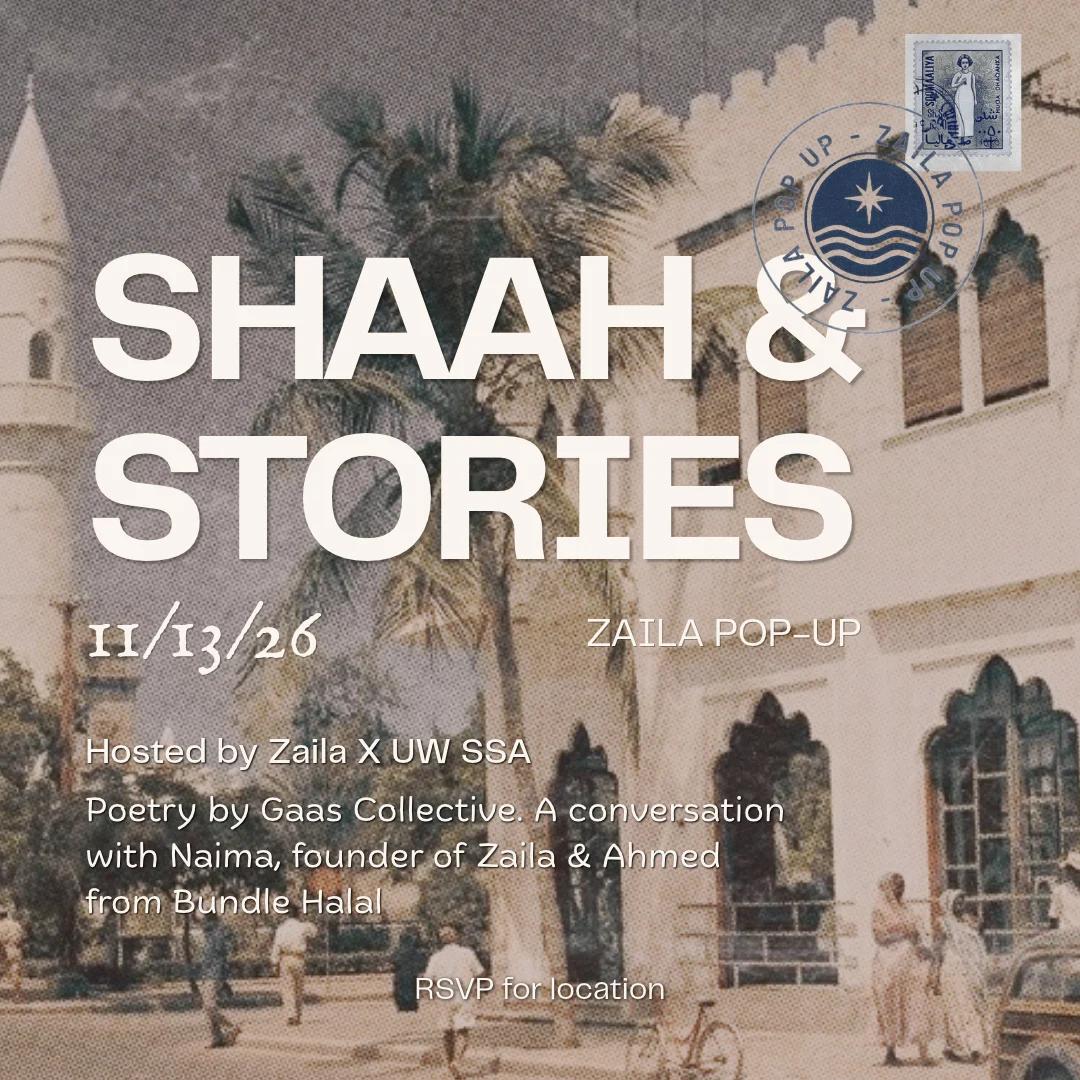
Nov13Fri
Zaila Presents: Shaah and Stories
Took place, Seattle (Luma shares the address once you RSVP), Seattle. Free · RSVP on Luma
Somali tea and live poetry with the UW Somali Student Association.
Dec11Fri
Kenya & Tanzania Independence Celebration
9:00 PM, 5041 Rainier Ave S, Unit 108, Seattle. From $18.81 on Eventbrite
Music and dancing for two independence days, on Rainier Avenue.
Details and RSVP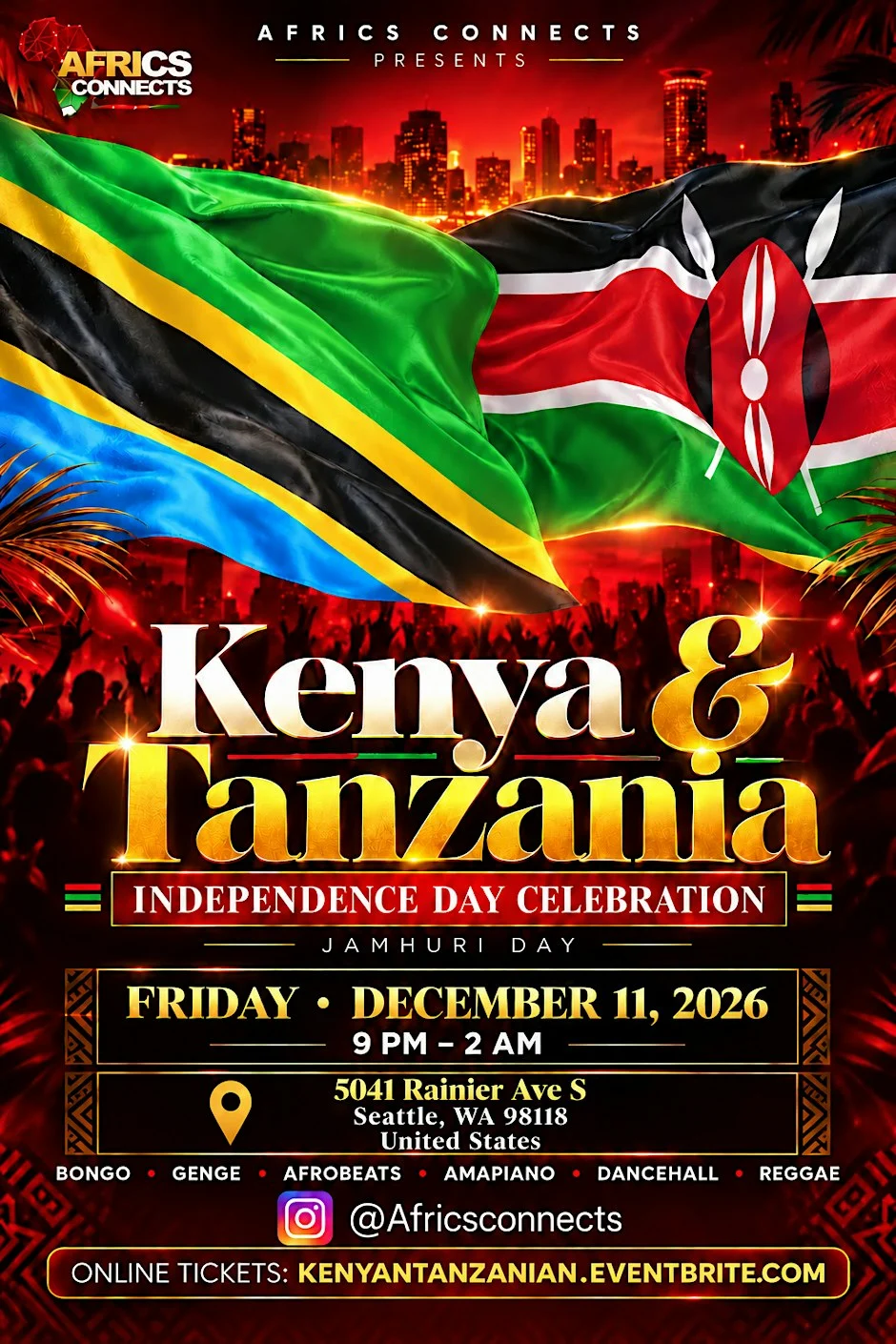
Sources
City of Seattle OIRA: East African community report (2016), South Seattle Emerald: Somali Community Services, South Seattle Emerald: Ethiopian Village opens. Population figures are the report’s; newer counts may differ. Checked 11 November 2026.
Questions people ask
- How many East Africans live in Seattle?
- The City of Seattle uses an estimate of 27,000 East Africans in Seattle and King County. Census surveys count fewer, and the city says they likely undercount.
- When did Somalis come to Seattle?
- Mostly after Somalia’s civil war began in 1991. Somali Community Services of Seattle grew out of mutual aid networks and was founded in 1995.
- Where is the Ethiopian Community in Seattle centre?
- At Ethiopian Village, 8323 Rainier Ave S, which opened in 2023 with senior housing, community space and Cafe Avole.
- Which Seattle neighbourhoods have the most East African residents?
- Rainier Beach, Brighton, Rainier Vista and High Point had the highest concentrations of African-language speakers in the city’s 2016 report.
#ethiopian community seattle#somali community seattle#eritrean community seattle#east african seattle history
Know a business we should feature?
Tell us who, and why. Pitch a story or nominate a business.
Keep reading

Heritage
The Black miners of Roslyn: how a coal strike brought hundreds of Black families to the Cascades
In 1888 a railway company brought Black miners to Roslyn to break a strike. By 1900 they were a fifth of the town. Their story, and what to see there today.
Ujima Network team, November 13, 2026. 5 min read
Heritage
The Seattle Black Panther Party: a short history, and the places that still carry it
Seattle had the first Black Panther chapter outside California. Its free clinic is still open on Yesler Way, and its memorial mural became a city landmark in 2026.
Ujima Network team, November 13, 2026. 5 min read

Heritage
Buffalo Soldiers at Fort Lawton: the regiment that was a third of Black Seattle, and what remains
In 1909, 900 Black soldiers arrived at Fort Lawton in what is now Discovery Park. Their band barracks still stands, and a Tacoma museum hopes to move in.
Ujima Network team, November 13, 2026. 4 min read
The Village