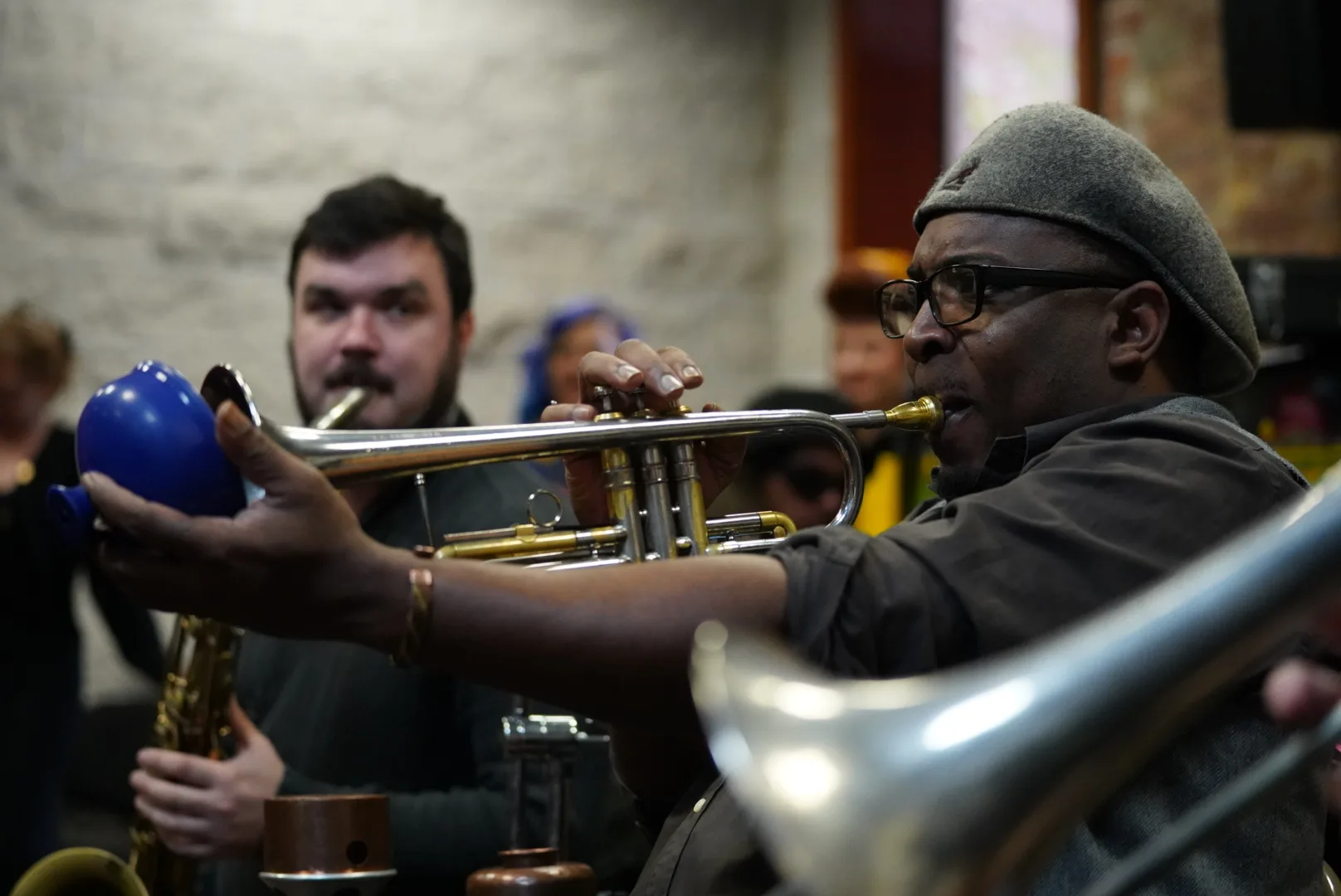
Ray Charles, Quincy Jones and Ernestine Anderson: Seattle’s jazz history and where to find it
A blind 17-year-old pianist, a Garfield trumpeter and a singer from Houston met on Jackson Street. Their story, and the signs, schools and stages that keep it.
- Ray Charles arrives
- 1948
- Grammy nominations for Anderson
- 4
- Essentially Ellington wins
- 4
The short answer
In 1948 Ray Charles, 17, arrived in Seattle and played Jackson Street, where a Garfield High trumpeter, Quincy Jones, asked him about arranging. Ernestine Anderson sang in the same scene. Their names are on S Jackson Street, Ernestine Anderson Place and Garfield’s Quincy Jones Performing Arts Center.
What changed
- Nov 11, 2026First published
Ernestine Anderson was born on 11 November, and in 2021 the City of Seattle proclaimed that date Ernestine Anderson Day (South Seattle Emerald). Her life is a good way into the story of the Jackson Street scene she grew up in, which launched three of the most important careers in American music.
Jackson Street after hours
In the 1940s, members of musicians’ union Local 493 played the jazz clubs along Jackson Street and, later, Madison. In March 1948 a blind 17-year-old pianist named Ray Charles arrived and quickly landed a regular engagement at the “Black” Elks Club, 662½ S Jackson Street. At the Black and Tan, at 12th and Jackson, a teenage trumpeter asked him about arranging. Charles later called him “a sweet, likable dude” (HistoryLink). Charles left for Los Angeles about two years later.
Quincy Jones
Quincy Jones was born in Chicago on 14 March 1933 and moved to Bremerton as a child in 1943 (HistoryLink). At Garfield High School from 1947 to 1950 he played in the band and orchestra, sang in the chorus and was student director of the swing band (Seattle Public Schools). He went on to tour with Lionel Hampton, arrange for Count Basie, Ella Fitzgerald and Frank Sinatra, and produce Thriller and Bad for Michael Jackson. He died on 3 November 2024, aged 91.
Ernestine Anderson
Ernestine Anderson was born in Houston on 11 November 1928. Her family moved to Seattle in 1944 for wartime shipyard jobs, and she sang with Bumps Blackwell’s Junior Band, part of the same teenage scene as Quincy Jones (HistoryLink, HistoryLink). Her career ran for more than five decades:
- She toured with Johnny Otis and Lionel Hampton and sang at the first Monterey Jazz Festival in 1958.
- She recorded more than 30 albums and made her Carnegie Hall debut in 1988.
- She was nominated for four Grammys, for Never Make Your Move Too Soon (1981), Big City (1983), Now and Then (1993) and Blues, Dues & Love News (1996). The last two were on Qwest, her school friend Quincy Jones’s label.
- She died in Seattle in March 2016, aged 87.
Where to find this history today
- Ernestine Anderson’s street signs: honorary signs on S Jackson Street between 20th and 23rd Avenues South, put up in 2016 (SDOT).
- Ernestine Anderson Place, next to the signs: housing for homeless and low-income seniors, built in 2012 by the Low Income Housing Institute.
- Garfield High School, 400 23rd Avenue, whose performing arts centre was named for Quincy Jones in 2008. It is a working school, so admire it from outside or go to a concert.
- Garfield Jazz: the school’s band programme, led for more than four decades by Clarence Acox, who arrived from New Orleans in 1971. Garfield has won Lincoln Center’s Essentially Ellington competition four times, in 2003, 2004, 2009 and 2010 (Garfield Jazz).
- Langston, where the 2021 Ernestine Anderson Musical Tribute was held.
Hear the story told
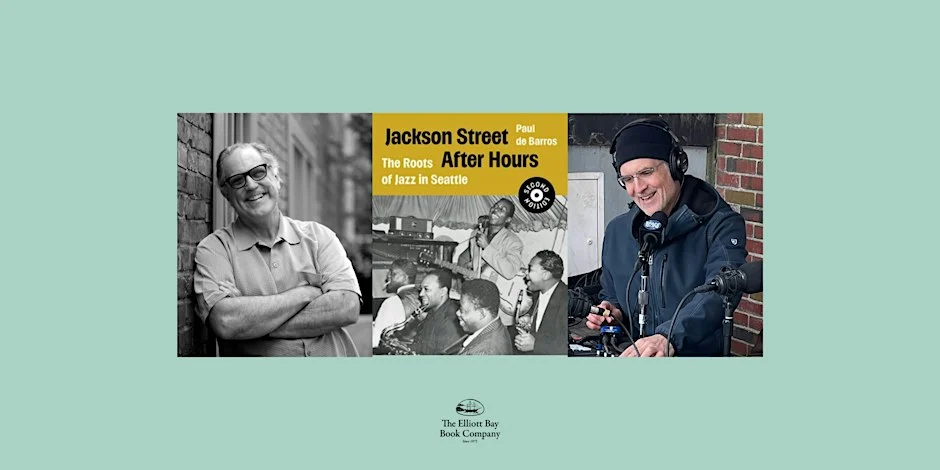
Paul de Barros wrote the book on this era, Jackson Street After Hours. He presents its new edition in conversation with Feliks Banel at Elliott Bay Book Company next week.
Nov16Mon
Jackson Street After Hours: Paul de Barros with Feliks Banel
Took place, Elliott Bay Book Company, Seattle. Free · registration optional
The new edition of the history of Seattle jazz from 1912 to 1961.
- 01
Langston Seattle
Black Arts & Culture · Seattle
The Central District arts institute that keeps this music on its stage.
104 17th Ave. S, Seattle
Hours, map and events
For the guitarist who came next, see Jimi Hendrix’s Seattle, and for the school at the centre of it all, our history of Garfield High.
Sources
HistoryLink: Quincy Jones, HistoryLink: Ernestine Anderson, Seattle Public Schools, SDOT blog, Garfield Jazz, South Seattle Emerald. Checked 11 November 2026.
Questions people ask
- Did Quincy Jones grow up in Seattle?
- Yes. He moved to Bremerton in 1943 and attended Garfield High School in Seattle from 1947 to 1950, playing trumpet in the Jackson Street clubs.
- Where did Ray Charles play in Seattle?
- At the Elks Club, 662½ S Jackson Street, from 1948, and at the Black and Tan at 12th and Jackson, where he met Quincy Jones.
- Who was Ernestine Anderson?
- A jazz and blues singer who grew up in the Central District, recorded more than 30 albums and was nominated for four Grammys. She died in 2016.
- Where are the Ernestine Anderson street signs?
- On S Jackson Street between 20th and 23rd Avenues South, next to Ernestine Anderson Place.
#seattle jazz history#quincy jones seattle#ernestine anderson#jackson street jazz
Know a business we should feature?
Tell us who, and why. Pitch a story or nominate a business.
Keep reading

Heritage
The Black miners of Roslyn: how a coal strike brought hundreds of Black families to the Cascades
In 1888 a railway company brought Black miners to Roslyn to break a strike. By 1900 they were a fifth of the town. Their story, and what to see there today.
Ujima Network team, November 13, 2026. 5 min read
Heritage
The Seattle Black Panther Party: a short history, and the places that still carry it
Seattle had the first Black Panther chapter outside California. Its free clinic is still open on Yesler Way, and its memorial mural became a city landmark in 2026.
Ujima Network team, November 13, 2026. 5 min read

Heritage
Buffalo Soldiers at Fort Lawton: the regiment that was a third of Black Seattle, and what remains
In 1909, 900 Black soldiers arrived at Fort Lawton in what is now Discovery Park. Their band barracks still stands, and a Tacoma museum hopes to move in.
Ujima Network team, November 13, 2026. 4 min read
The Village