Seattle’s civil rights movement: the 1966 school boycott and the nine-year fight for open housing
Seattle voters rejected open housing two to one in 1964. Two years later thousands of children walked out of segregated schools. How the city’s civil rights movement won, slowly.
- Students absent on 1 April 1966
- 3,918
- The 1964 vote against open housing
- 115,627–54,448
- Open housing becomes law
- 19 April 1968
The short answer
Seattle’s open housing campaign ran from 1959 to 1968. Voters rejected an open housing law on 10 March 1964 by 115,627 to 54,448; the City Council passed one unanimously on 19 April 1968. On 31 March and 1 April 1966, about 3,000 students left school for “freedom schools” to protest segregated schools.
What changed
- Nov 13, 2026First published
It is easy to think the civil rights movement happened somewhere else. It happened here too: in the Mayor’s office, at Westlake, in churches turned into classrooms, and at the ballot box, where the city’s voters said no before its council finally said yes. This is a short guide to the two campaigns that defined the 1960s in Seattle. Checked 13 November 2026.
A city divided by where you could live
In 1960 African Americans were 4.8% of Seattle’s population, up from 1% in 1940, and 78% of them lived in the Central District. That was not chance. In 1959 Robert L. Jones and his wife were refused a house outside the Central Area because of their race; the state Board Against Discrimination backed them, but the state Supreme Court ruled 5 to 4 for the sellers (Seattle Municipal Archives). Our history of the Central District explains how the lines were drawn.
1963: Seattle’s first sit-in
The Seattle NAACP asked the City Council for an open housing law in 1961, hoping for action before the 1962 World’s Fair. The council declined. By 1963 patience had run out (Seattle Municipal Archives):
- 1 July 1963: protesters gathered at City Hall and more than 300 people packed the council meeting.
- July 1963: about 35 young people from the Central District Youth Club occupied the Mayor’s office for nearly 24 hours, the city’s first sit-in. It ended after a meeting with the Rev. Mance Jackson, the Rev. John Adams and the Rev. Samuel McKinney.
- 17 July 1963: the council created the Seattle Human Rights Commission.
- 28 August 1963: a Freedom March organised by the Rev. Dr. John H. Adams took 1,000 demonstrators to the Federal Courthouse.
1964: the voters say no
Instead of passing an open housing law, the council sent it to the ballot. Two days before the vote more than 1,500 people rallied at Westlake. On 10 March 1964 Seattle rejected the measure by more than two to one: 115,627 against, 54,448 in favour (Seattle Municipal Archives).
1966: the school boycott
Housing decided schooling. Black children were 9.1% of Seattle’s pupils but were concentrated in a handful of schools: Horace Mann Elementary was 95% Black, Leschi 89%, and Garfield enrolled three-quarters of the city’s Black high school students. Years of proposals to the school board had gone nowhere (UW Seattle Civil Rights and Labor History Project).
On 23 February 1966 the NAACP, the Congress of Racial Equality (CORE) and the Central Area Civil Rights Committee announced a boycott. They had two demands: a published plan to integrate the schools within a reasonable time, and compulsory human relations training for all school staff. The Rev. John Adams of First AME Church chaired the boycott committee (UW).
On Thursday 31 March and Friday 1 April, children went to “freedom schools” instead. They were held at First AME, Madrona Presbyterian, Mount Zion Baptist, Tabernacle Baptist, Goodwill Baptist, Cherry Hill Baptist, the East Madison YMCA, the Prince Hall Masonic Temple and other sites, with Temple de Hirsch and St. Clement’s Episcopal Church added when they overflowed. Organisers planned for about 100 teachers. Adams counted about 3,000 pupils, roughly 30% of them white. District figures show 3,185 absences on the first day and 3,918 on the second, against 824 the day before (UW).
Did it work? Adams called it a “solid success” that forced the first full public debate on segregation in Seattle’s schools. The district played it down, and CORE’s Walter Hundley later said the long-term results disappointed him. The struggle, the project’s history concludes, continued (UW). Our history of Garfield High School has more on the school at the centre of it.
1968: open housing at last
On 19 April 1968, three weeks after Martin Luther King Jr. was assassinated, the City Council unanimously passed Ordinance 96619, banning unfair practices in the sale, rental and financing of housing. Its chief architect was Sam Smith, in his first term as the first African American on the council. The law was later widened: sex, marital status, sexual orientation and political ideology in 1975, age and parental status in 1979, creed and disability in 1986, and gender identity in 1999 (Seattle Municipal Archives).
The same organisations are still at work
Several of the groups that led these campaigns are still here:
- 01
Seattle King County NAACP
Local Advocacy
Proposed the first open housing ordinance in 1961 and co-led the 1966 boycott.
Hours, map and events - 02
Urban League of Metropolitan Seattle
Economic Empowerment · Seattle
Proposed the “Triad Plan” to pair Black and white schools in 1965. Today it works on housing, education and jobs.
105 14th Ave, Suite 200, Seattle
Hours, map and events
This winter the Seattle Public Library marks the centennial of the Rev. Dr. Samuel B. McKinney, longtime pastor of Mount Zion Baptist Church and one of the three ministers who met the 1963 sit-in protesters:
Dec5Sat
A McKinney Centennial Tribute: film, history and song
12:00 PM, Central Library, Level 1 Auditorium, Seattle. Free, no registration needed
Film, history and song for the McKinney centennial.
Details and RSVP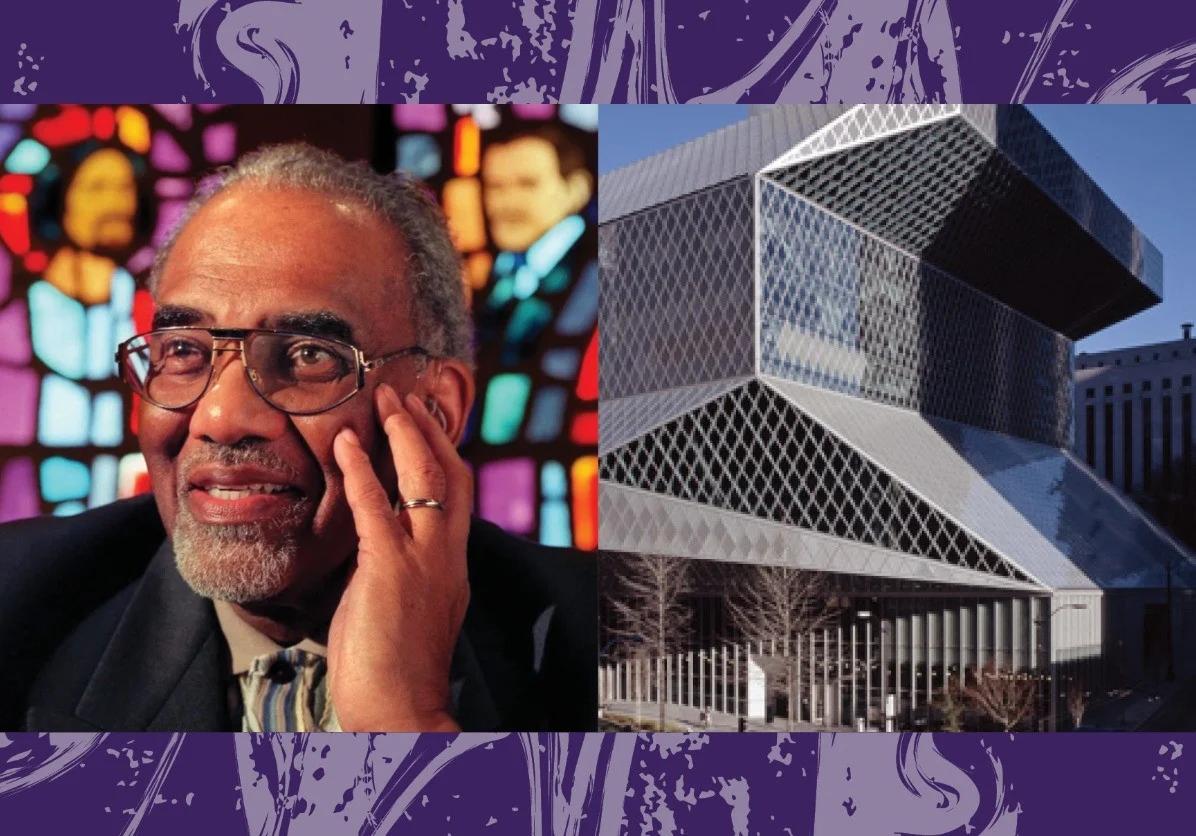
Dec10Thu
A McKinney Centennial Celebration: readings and songs
4:00 PM, Douglass-Truth Branch, The Seattle Public Library, Seattle. Free, no registration
Readings and songs at the Douglass-Truth Branch.
Details and RSVP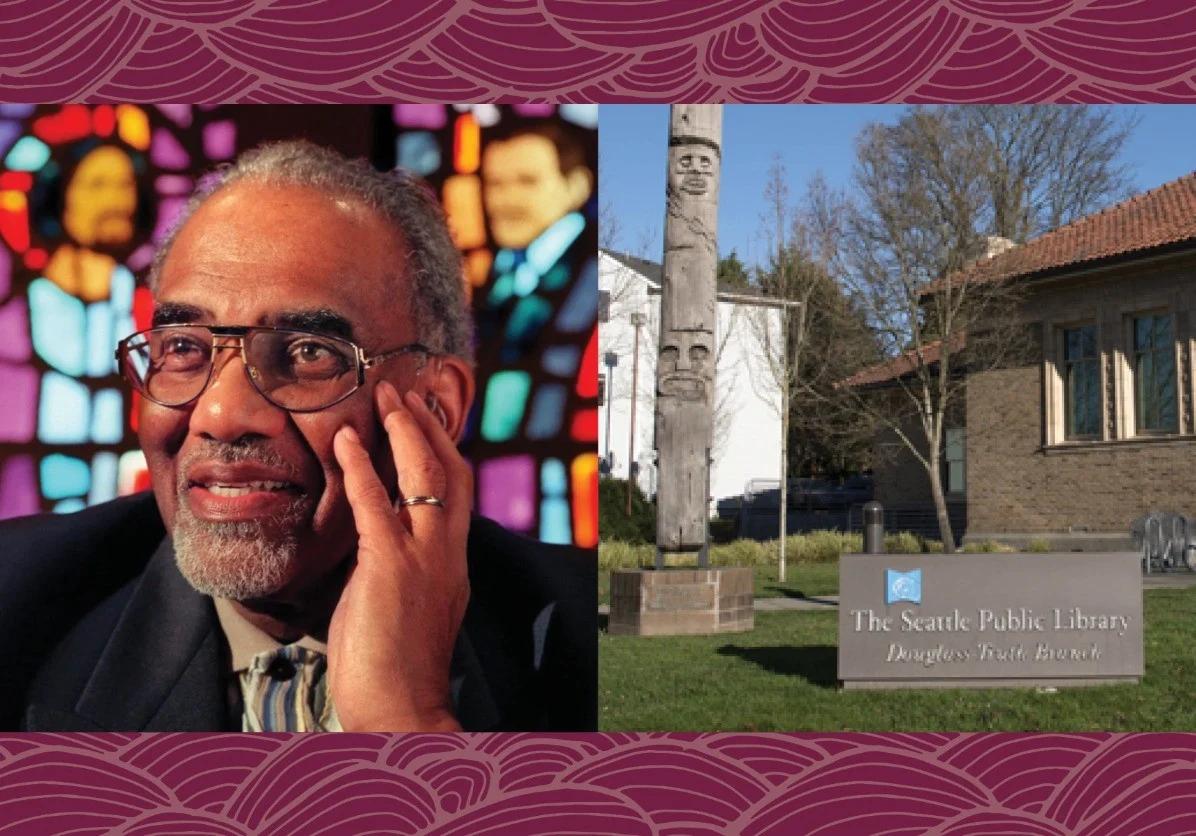
If you face housing discrimination today, start with our tenant rights guide. For more on the churches that hosted the freedom schools, see Seattle’s historic Black churches, and for the yearly commemorations, MLK Day in Seattle.
Run one of these? Claim your listing for free to add photos, hours and events. Know one we missed? Tell us.
Sources
Seattle Municipal Archives: The Seattle Open Housing Campaign, 1959–1968, UW Seattle Civil Rights and Labor History Project: The Seattle School Boycott of 1966, by Brooke Clark. Checked 13 November 2026.
Questions people ask
- What was the Seattle school boycott of 1966?
- A two-day protest against segregated schools on 31 March and 1 April 1966, organised by the NAACP, CORE and the Central Area Civil Rights Committee. About 3,000 students went to “freedom schools” in churches and community halls.
- When did Seattle pass open housing?
- On 19 April 1968, when the City Council unanimously passed Ordinance 96619. Voters had rejected an open housing measure on 10 March 1964 by 115,627 to 54,448.
- Who was Sam Smith?
- The first African American member of the Seattle City Council and the chief architect of the 1968 open housing ordinance. He had earlier served in the Washington State Legislature.
- Were Seattle schools segregated?
- Not by law, but in practice. In the mid-1960s Black students were 9.1% of enrolment yet a few Central Area schools were 80% to 95% Black, because of where Black families were allowed to live.
#seattle civil rights movement#seattle school boycott 1966#seattle open housing 1968#freedom schools seattle#seattle civil rights history
Know a business we should feature?
Tell us who, and why. Pitch a story or nominate a business.
Keep reading

Heritage
The Black miners of Roslyn: how a coal strike brought hundreds of Black families to the Cascades
In 1888 a railway company brought Black miners to Roslyn to break a strike. By 1900 they were a fifth of the town. Their story, and what to see there today.
Ujima Network team, November 13, 2026. 5 min read
Heritage
The Seattle Black Panther Party: a short history, and the places that still carry it
Seattle had the first Black Panther chapter outside California. Its free clinic is still open on Yesler Way, and its memorial mural became a city landmark in 2026.
Ujima Network team, November 13, 2026. 5 min read

Heritage
Buffalo Soldiers at Fort Lawton: the regiment that was a third of Black Seattle, and what remains
In 1909, 900 Black soldiers arrived at Fort Lawton in what is now Discovery Park. Their band barracks still stands, and a Tacoma museum hopes to move in.
Ujima Network team, November 13, 2026. 4 min read
The Village