
Quincy Jones and Ray Charles in Seattle: two teenagers, one street of nightclubs
In 1948 a Garfield High trumpet player met a blind 17-year-old pianist just off the bus from Florida. Where Quincy Jones and Ray Charles lived, played and learned in Seattle.
- Jones family moves to Seattle
- 1947
- Ray Charles steps off the bus
- March 1948
- Nightclubs around Jackson Street
- 30+
The short answer
Quincy Jones moved to Seattle in 1947 and went to Garfield High School. Ray Charles arrived by bus from Tampa in March 1948, aged 17, and left in 1950. They met as teenagers in the after-hours clubs around Jackson Street. Garfield’s Quincy Jones Performance Center was dedicated on 26 September 2008.
What changed
- Nov 13, 2026First published
Two of the most important musicians of the twentieth century learned their trade in Seattle at the same time, as teenagers, in the same after-hours clubs. This is where Quincy Jones and Ray Charles lived and worked in the city, and what is left to see. Checked 13 November 2026.
Quincy Jones: from Bremerton to 22nd Avenue
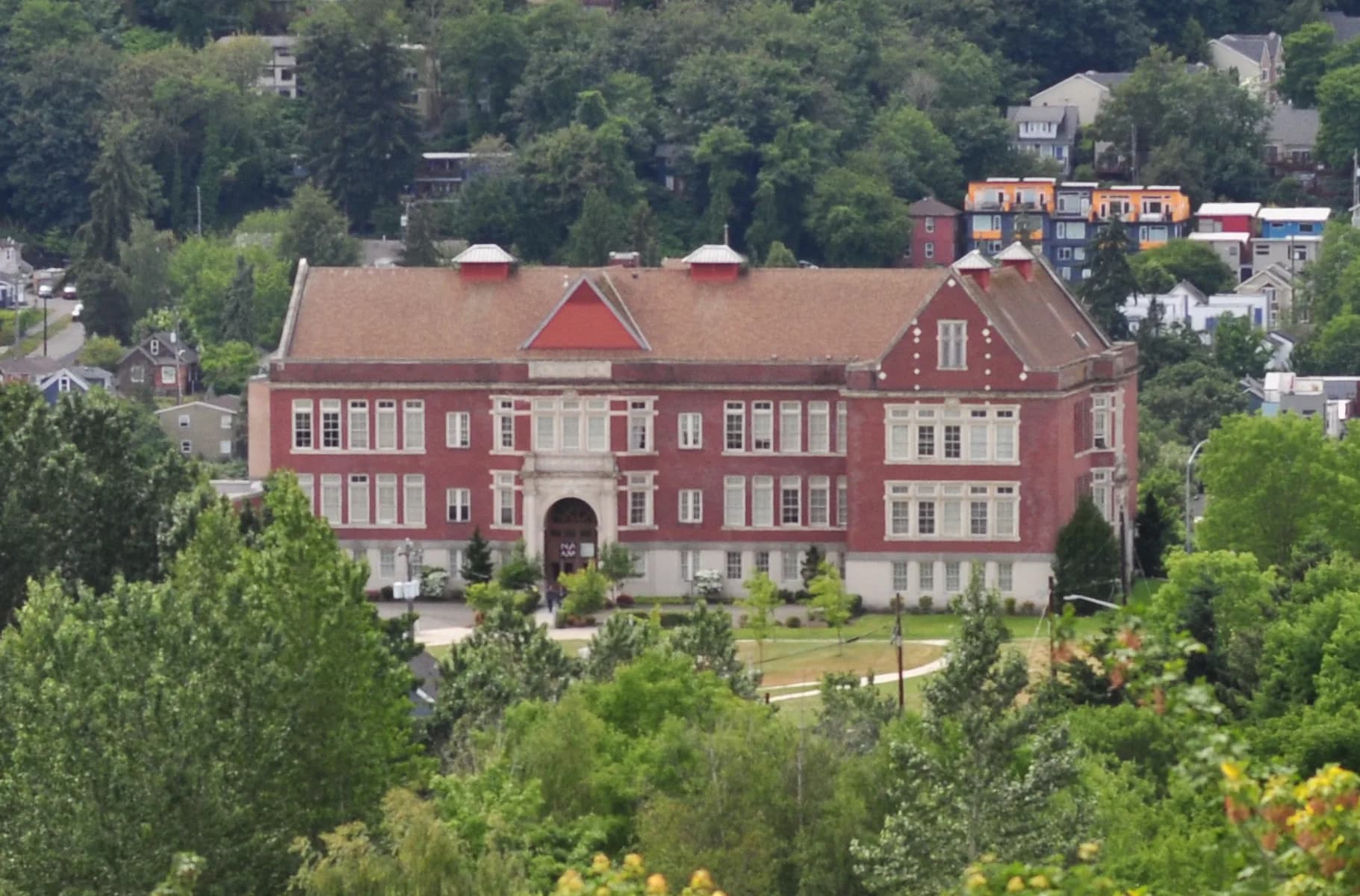
Quincy Jones was born in Chicago on 14 March 1933. His family came west in 1943, arriving in Bremerton on 4 July, where his father worked at the Puget Sound Naval Shipyard and the family lived in the segregated Sinclair Heights development. In 1947 they moved across the water to 410 22nd Avenue in Seattle, and Quincy enrolled at Garfield High School (HistoryLink).
At Garfield he played in the school band under Parker Cook and took lessons at Frank Waldron’s School of Saxophone & Trumpet. He joined the Charles Taylor Band, whose early jobs included a paid dance at the YMCA at 23rd and Olive. When Count Basie’s band played the Palomar Theatre in 1947, he persuaded its trumpeter, Clark Terry, to give him lessons early in the morning before school. Then bandleader Robert “Bumps” Blackwell took the Taylor band over, and the teenagers were playing real clubs (HistoryLink). Our history of Garfield High School tells the school’s side of the story.
Ray Charles: five days on a bus
Ray Charles, then still R. C. Robinson, arrived in Seattle in March 1948 after a five-day bus trip from Tampa, Florida. He was 17. He wanted to start again somewhere far from Florida and was too intimidated to try New York or Chicago, so his friend, the guitarist Garcia “Gosady” McGee, took a map, drew a line diagonally across it, and found Seattle (HistoryLink).
He was working within days. More than 30 nightclubs operated around Jackson Street, open at all hours. Charles formed the McSon Trio with McGee on guitar and Milt Jarrett on bass, got a regular 15-minute slot on KRSC radio, and in late 1948 the trio played one of the earliest live television broadcasts in Seattle. His first record, “Confession Blues”, was cut in a small Seattle studio and released early in 1949. He rented a small apartment on 20th Avenue and left the city in 1950 to tour with the blues guitarist Lowell Fulson (HistoryLink).
How they met
They met in a club, but accounts differ on which one. HistoryLink’s essay on Charles says Jones, then 15, went to the Elks Club to see the “blind dude” he had heard about, and later called it “love at first instinct for both of us” (HistoryLink). Its essay on Jones puts the meeting at the Black and Tan when he was about 14. Both agree on what came next: Charles taught the younger boy how to arrange for several horns, and the friendship lasted for life (HistoryLink).
Where it happened
These are the addresses HistoryLink gives. Most of the buildings have changed or gone, so treat this as a walk through history, not a list of venues:
- Elks Club, 662 S Jackson Street: where Charles got his first Seattle job.
- Black and Tan, 12th Avenue and Jackson Street: one of the after-hours clubs both played.
- Rocking Chair, 1301 E Yesler Way: the blues club where a record producer from Los Angeles first heard Charles’s trio. “Rockin’ Chair Blues” became a hit for him late in 1949.
- Savoy Ballroom, 2203 E Madison Street: one of the rooms the Blackwell bands worked.
- Garfield High School: home of the Quincy Jones Performance Center, whose dedication Jones attended on 26 September 2008 (HistoryLink).
What came after
Jones met Lionel Hampton in 1950, around his Garfield graduation, and won a scholarship to Seattle University. In 1951 he left for a music school in Boston, and soon afterwards Hampton hired him as a trumpeter. Seattle kept claiming him: a 50th birthday concert at the Paramount with Ray Charles on 12 March 1983, an honorary degree from Seattle University in May 1990, the first Lifetime Achievement Award from the Northwest African American Museum during its opening week in March 2008, and the University of Washington’s commencement address on 14 June 2008. He died on 3 November 2024, aged 91 (HistoryLink). Charles, who died in 2004, always credited Seattle as the place he made his first record and got his start (HistoryLink).
Go deeper this month
Jazz historian Paul de Barros has a new edition of “Jackson Street After Hours”, his history of this scene, built from interviews with more than eighty musicians. He talks about it on Monday 16 November and at MOHAI on Thursday 19 November. Our own history of Seattle jazz tells the wider story, and the Northwest African American Museum guide explains how to visit. For live music now, look through /events.
Sources
HistoryLink: Jones, Quincy, by Peter Blecha (2013, updated since), HistoryLink: Charles, Ray, by Cassandra Tate (2004). Checked 13 November 2026.
Questions people ask
- Did Quincy Jones go to Garfield High School?
- Yes. His family moved to 410 22nd Avenue in Seattle in 1947 and he enrolled at Garfield, where he played in the school band. Garfield’s Quincy Jones Performance Center was dedicated on 26 September 2008.
- When did Ray Charles live in Seattle?
- From March 1948, when he arrived by bus from Tampa aged 17, until 1950, when he left to tour with Lowell Fulson. He made his first record, “Confession Blues”, in Seattle.
- How did Quincy Jones and Ray Charles meet?
- As teenagers in Seattle’s after-hours clubs in 1948. HistoryLink’s two essays name different clubs, the Elks Club and the Black and Tan, but agree that Charles taught Jones to arrange music and that they stayed friends for life.
- Was Quincy Jones born in Seattle?
- No. He was born in Chicago in 1933, moved to Bremerton in 1943 and to Seattle in 1947.
#quincy jones seattle#ray charles seattle#quincy jones garfield high school#jackson street jazz seattle#ray charles 1948 seattle
Know a business we should feature?
Tell us who, and why. Pitch a story or nominate a business.
Keep reading
Arts and culture
Jacob Lawrence and Gwendolyn Knight in Seattle: thirty years of painting, and where to find them now
Two of America’s great painters moved to Seattle in 1971 meaning to stay four or five years. They never left. What they made here, and where their names live on.
Ujima Network team, November 13, 2026. 5 min read
Arts and culture
Octavia Butler in the Seattle area: her Lake Forest Park years and the street that bears her name
The author of Kindred spent her last seven years in Lake Forest Park, walking to the bookshop and the bus. Where she lived, what she did here and how to honour her.
Ujima Network team, November 13, 2026. 4 min read
Arts and culture
Seattle hip-hop history: from the Emerald Street Boys and Sir Mix-A-Lot to today
Seattle had the first rap radio show in the West, a platinum-selling label run from a downtown office, and a city law that nearly shut the scene down. A short history.
Ujima Network team, November 13, 2026. 5 min read
The Village